
Beautiful Bog Garden Plants
What are bog garden plants? Whether you have created an area next to a pond for marginal plants or you have an area of the garden where the soil is constantly damp, marginal or bog plants can make an attractive display. Far from being a problem area, a moisture-retaining soil gives us a chance to choose a different range of interesting and attractive plants. Marginals or bog plants do not need to be sitting in water constantly, but they do prefer moisture-retentive soil, that does not dry out on a regular basis.
Here are some of my favourite plants for bog gardens.
Rodgersia ‘Badenweiler’
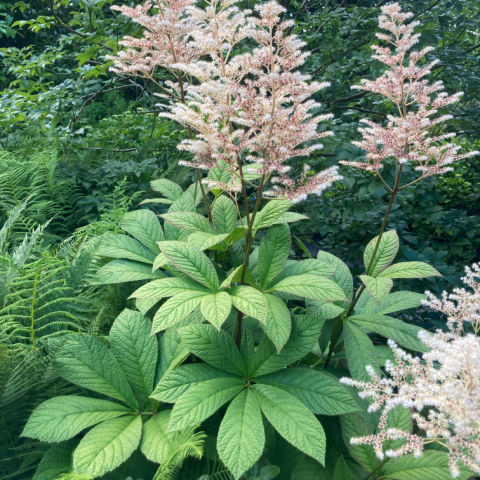
A distinctive herbaceous perennial that grows to 140cm-200cm height. It is hardy across the UK and Ireland, even in severe winters. Grow in deep, fertile, moisture-retentive loam or clay soil. Rodgersia ‘Badenweiler’ thrives in full sun or partial shade. Position in a sheltered spot to protect against drying winds. In late summer, panicles of white or pink flowers appear. Once the petals have faded, the inedible fruits are still attractive on the stems for several weeks.
Ligularia dentata ‘Desdemona’
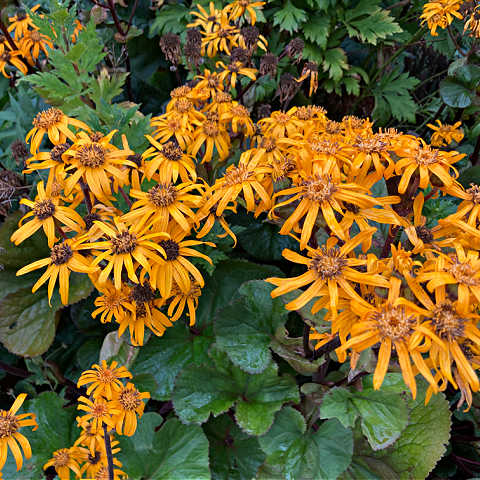
Leopard plants are robust herbaceous perennials. I particularly like the way the leaves have a bronze-tint and also deep purple on the underside. Ligularia dentata ‘Desdemona’ has 10cm orange daisy flowers that grow in clusters, making it eye-catching and worth the space in the garden. It flowers late summer to early autumn. Ligularia denata needs poorly-drained, clay or loamy soil to thrive. Grow in full sun in a south- or west-facing position in a sheltered spot. Height 100cm. Propagate by division.
Iris Versicolour

The blue flag iris grows to around 80cm height and has narrow, upright leaves and branched stems that carry multiple purple with white flowers. Grow in clay, loam or sandy soil, that is acid or neutral and poorly drained. Iris versicolour requires full sun, so grow in a south- or west-facing site. Propagate by division from late summer to early autumn.
Trollius × cultorum ‘Taleggio’
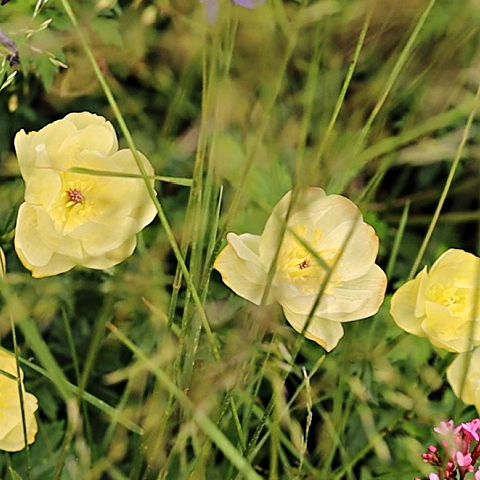
Globeflowers prefer clay or loam soils that remain damp or are poorly drained. These herbaceous perennials form a clump of leaves and their flowers are held above on upright stems. I spotted this variety at RHS Chelsea Flower Show this year and liked the subtlety of the pale, yellow flower. Grow in full sun or partial shade, the plants are across UK and Ireland and will tolerate both sheltered and exposed sites. Height 60cm.
Filipendula ulmaria

Meadowsweet is a relatively unfussy perennial plant that grows to around 90-100cms tall and up to 100cms spread. It grows vigorously, so may not be suitable for smaller gardens. The flowers are either pink or white and can be used for culinary purposes (check for potential allergy issues). They add a sweet, honey, almond, hay flavour to food. Filipendula ulmaria prefer moist by free-draining or even poorly draining soil and will grow in all aspects.
Eupatorium maculatum Atropurpureum Group
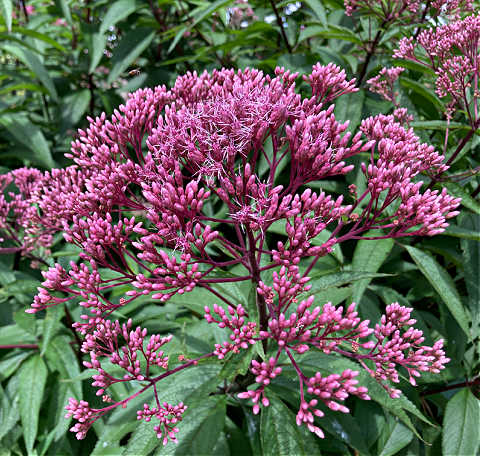
A group of perennials that grow to 200cm height and are commonly known as Joe-pye weed. They provide interest in the garden with purple-red stems and in summer they produce flat, terminal clusters of dusky pink flowers (occasionally white). They usually thrive in any soil type and position, and will happily cope with moist, but well-drained through to poorly drained soils. Propagate by division in spring or seeds sown in spring or autumn. I’ve never had any luck with germinating the seeds in pots, but luckily, they now readily self-sow in our garden. Hardy throughout UK, Ireland and across Europe.
Caltha palustris, Marsh marigold
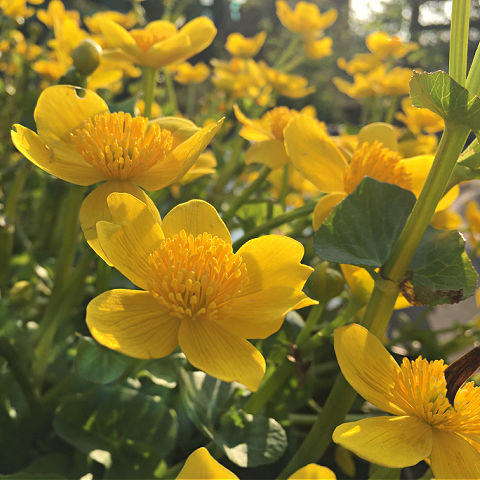
Marsh marigold is happy to sit with its roots in the shallows of a pond or in a bog garden. The rounded leaves are an intense green, which contrasts well with the rich, buttery yellow of the flowers that appear in spring. Height 40cm and 45cm spread. Grow in loamy soil, in full sun in a west- or south-facing position. This native plant is hardy across UK, Ireland and across Europe. Propagate by seed, do this immediately that they are ripe. Or, by division in late summer or early spring. These are ideal bog garden plants.
Matteuccia struthiopteris
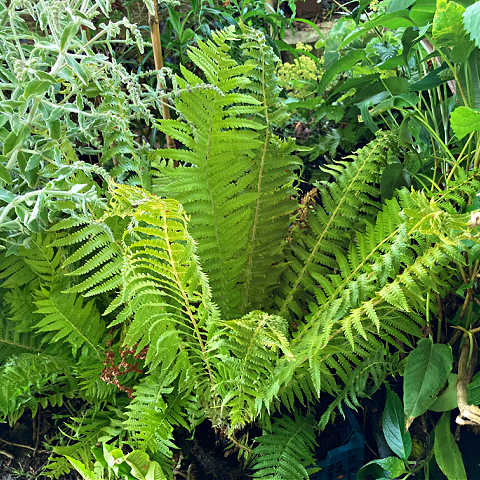
Commonly known as the shuttlecock fern, it grows to 150cm height and spreads readily through suckering. Grow in damp soil, in partial shade or even full shade, in any soil type except chalky soil. It prefers a sheltered site, and is hardy across the UK and Ireland. I have this growing in full sun in a bed that does not remain continually moist and it grows well enough, but doesn’t reach much more than 80cm in height. This year I have moved some of plants to a shadier and damper spot and will watch with interest, to see how they respond to their preferred growing conditions.
Iris pseudacorus
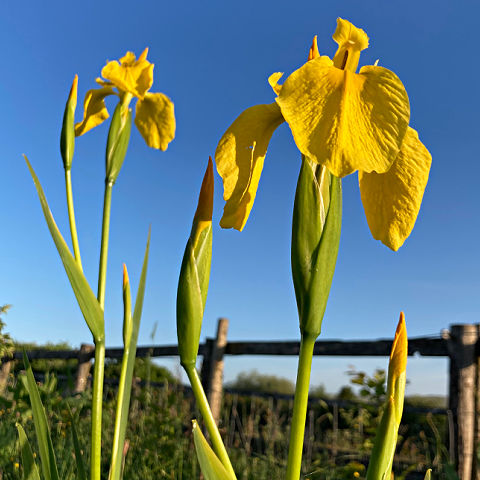
This may be a common sight in gardens and river banks, but the yellow flag iris certainly deserves consideration in a bog garden. The bright yellow flowers appear in late spring, followed by large seed pods. Grow in loamy or clay, acidic soil that is poorly drained, or in the shallows of a pond. They thrive in full sun and partial shade, particularly in a south- or east-facing position. Height 150cm. These native irises are fully hardy throughout UK, Ireland and Europe. The leaves usually die back in late summer and reappear in spring.
Primula Candelabra hybrids (Pf)
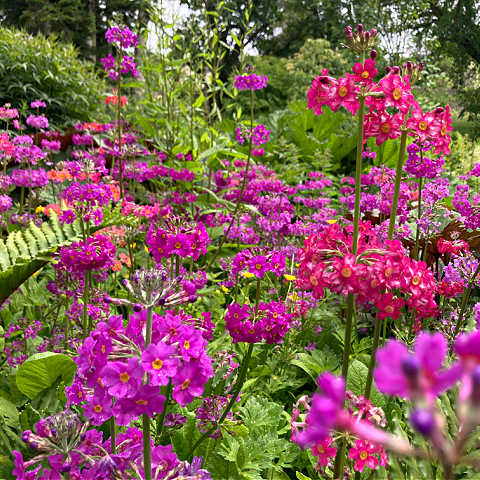
A group of hybridised primulas that offer a range of colours. They can continue to cross-pollinate with other primulas and provide more colours in the garden. The leaves grow from a basal rosette and the flower stems rise in late spring and early summer with layers, or whorls of flowers. They range in height from 40cm to 100cm. Grow in loam or clay, acid or neutral, poorly drained soil. They prefer partial shade and are unfussy about aspect. They will grow in full sun as long as the soil does not dry out. Hardy in UK, Ireland and northern Europe. To propagate, divide in spring.
On the edges
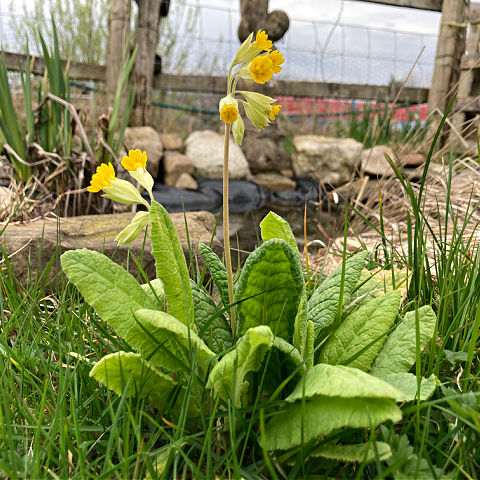
In my garden, there is an area that remains damp all year round, in fact, it could be described as positively soggy! Around the edges of the dampest area, I have planted young cowslip plants. They thrive in damp soils, but struggle in constantly waterlogged areas, so next to a bog garden an ideal spot for them. I think of them as transition plants that move the eye across the garden from boggy to more well-draining ground.
More information
The article about beautiful bog garden plants was written for Amateur Gardening magazine and published in autumn 2025. I have updated some of the specific varieties and images. Additionally, links are included to help you find the suggested plants. For more inspiration for your garden, try flowers to grow in damp soil for the edges of your bog garden.

- Plants to support wild birds - May 29, 2026
- 10 Plants with Apricot - May 8, 2026
- Garden flowers in November - May 3, 2026
Thanks for this information, Liz. I would like your opinion about a windy garden, near the sea. The soil is not typical/y coastal but rather heavy and acidic.
Many thanks
Angela
Hi Angela, if you are looking for a garden consultation, please contact me via the contact page to discuss.