

Plants that soothe and lift
Plants that lift and soothe our spirits. Mid-January can be a difficult time for many of us. The skies are often grey, the excitement and joy of mid-winter festivities are over and it feels like there is a long time until spring and a new growing season starts. With that in mind, I’ve been looking at a selection of plants that can lift our spirits or provide a soothing feel in the garden. And, while they won’t all be in flower this month, I think choosing new plants is always a delight and gives us something joyous to look forward to.
Plants put into the ground during the cooler months often establish faster and produce a better display. We may not see any activity above ground, but within the soil, the plant will be settling in and establishing its network of roots, giving it a head start when the soil warms in spring.
Lavandula augustifolia ‘Rosea’
Whether grown as individual plants, in the ground or in containers, or grown as low-growing hedge, lavender has a lot to offer. Rather than the usual mauve flowers, this variety produces pale pink blossoms held above grey-green to silvery foliage. The whole plant is scented. Height and spread 60cms (2ft).
As with all lavender, cut back after flowering, but do not cut into the old wood. It thrives in full sun in well-drained soil, avoid growing on clay soil where it may fail to survive. Position in a sheltered spot on any site except north-facing.
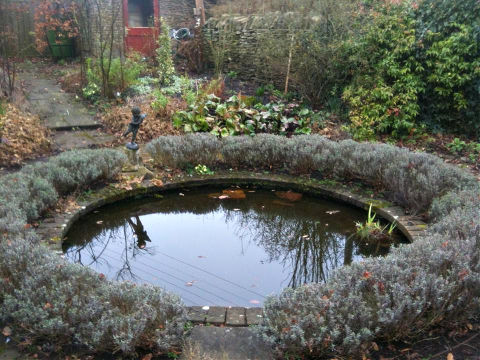
In my parent’s garden, there was a lavender hedge surrounding a formal pond in a small walled garden. During autumn and winter, when many of the plants had died back, the Lavandula augustifolia ‘Rosea’ hedge provided structure and form.
Rosemary
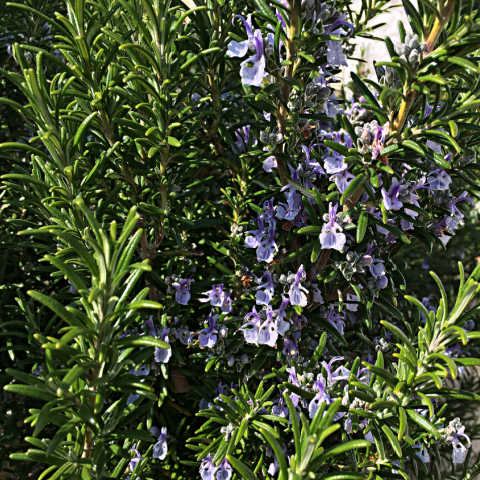
Apart from being great to use in the kitchen, Rosemary is also a superb garden plant. It is evergreen, so provides shape and structure in the winter landscape and in spring, produces very small flowers, which attract pollinators. The leaves are aromatic and have long been associated with memory. Research suggests that there may indeed be a compound in rosemary that can have a positive impact on our ability to remember to do things. Rosemary will always be included in my lists of plants that soothe and lift our spirits.
Rosemary varieties include low-growing, prostrate plants to wide, bushy shrubs, and even those with a very upright habit. Choose a variety that works with the space you have available. Grow in full sun in well-draining soil. Avoid growing in clay soil where it may fail to thrive. Choose a west- or south-facing site and if possible, a sheltered spot. Hardy across most of UK and Ireland, but may not survive a harsh winter.
Jasminum nudiflorum
There are several different types of jasmine, from tender plants with a heady fragrance to this hardy, deciduous winter jasmine. Although the flowers of winter jasmine are not fragrant, the long arching branches bear cheery yellow flowers during the coldest and dullest months of the year. Height and spread 250cm to 300cm (8ft2in to 10ft). Grow in full sun or partial shade in a sheltered spot. It is unfussy about soil type as long as it is well-drained. If possible, provide a sheltered spot.
We used to grow it against a wall, occasionally I would tie some of the branches to the trellis on the wall to prevent it hitting us in the face as we walked past it, but other than that, it was a trouble-free plant.
Melissa officinalis
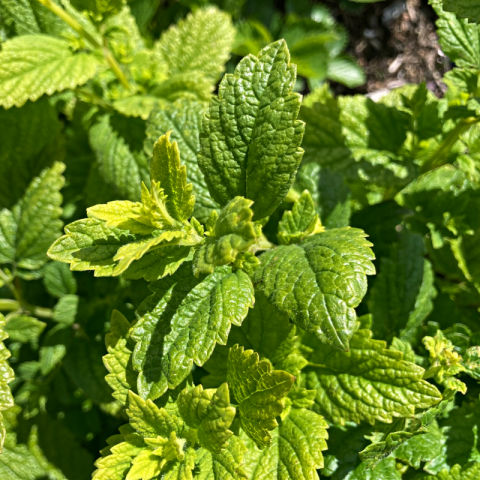
The scent of lemon balm is zingy and refreshing and will release its fragrance as you brush past it in the garden. I use it to make an infusion for friends who prefer not to drink tea or coffee. It is unfussy about growing conditions, but prefers well-drained soil. Although the preference is for a sheltered spot, it grows reasonably well in our windswept, north facing, hillside garden.
Lemon balm grows to 50 to 100cm (1ft8in to 3ft3in) height and up to 50cm (1ft8in) spread. It produces white or pale mauve flowers during summer and will readily self-seed in the garden. It responds well to a ‘Chelsea chop’, which encourages bushier grow and later flowering. I like to use the cut stems in flower arrangements and although they wilt at first, the stems soon pick up again.
Hamamelis x intermedia ‘Diane’
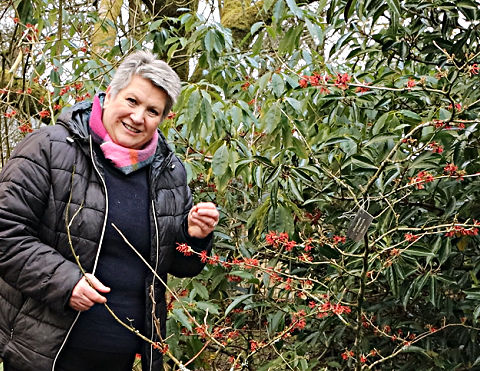
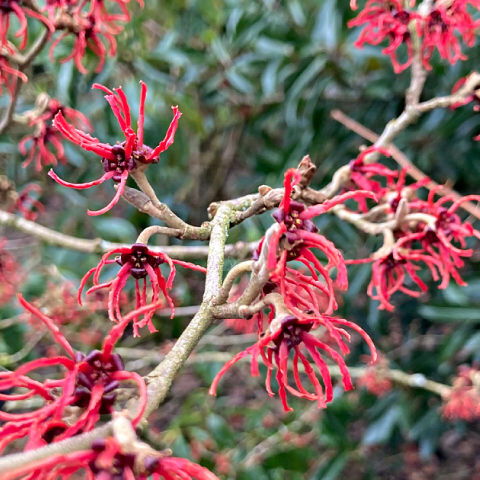
Who could resist the intense, warm, coppery-red of these witch hazel ‘Diane’ flowers borne on bare stems? I think the pop of colour and the heady fragrance of witch hazel in the depths of mid to late winter is so inviting, it calls us to venture outside. This deciduous shrub has an open habit and offers year-round interest. The green leaves provide a great backdrop to other star plants during the spring and summer, and in autumn the leaves turn yellow and red. Grow in full sun or partial shade on moist, but well-drained or well-draining soil. It needs acid to neutral soil and will fail to thrive on chalky soils. Hardy throughout the UK and Ireland, even in harsh winters. Consider it an investment plant, they can be pricey, but can grow into large shrubs to 400cm (13ft) height and spread.
Mentha longifolia ‘silver-leaved’
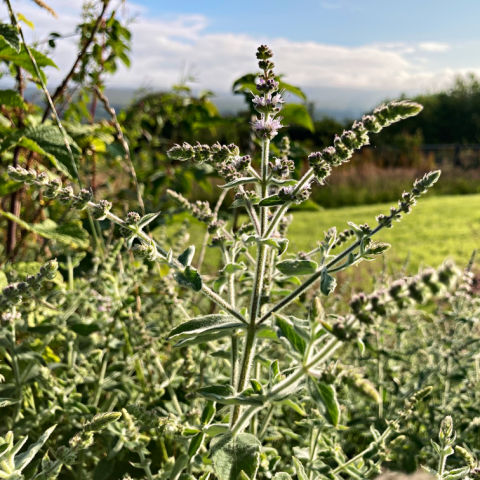
Another essential in my list of plants that soothe and lift the spirits is mint. Mint is great for providing a fresh, uplifting scent in the home or the garden. As with all varieties of mint, this can become a bit of a thug if left unchecked. Grow it in a deep container or an area of the garden when it can be easily maintained. I grow it in a central bed in an informal area of the garden, but where the grass is mowed around it on a regular basis to keep any stray growth cut back.
Mentha longifolia ‘silver-leaved’ is not as strong in scent as a culinary mint. I like it in the garden for the soft, velvety leaves and its silvery colour. The pale mauve flowers appear in mid to late summer and attract butterflies and other pollinators. Hardy throughout UK and Ireland. It is unfussy about soil or situation, but may fail to thrive in waterlogged soil. Height 60cm (2ft).
It was included in the sensory garden I created for the Royal Welsh Show in 2025 called the Scents and Sensibility Garden.
Clematis montana ‘Marjorie’
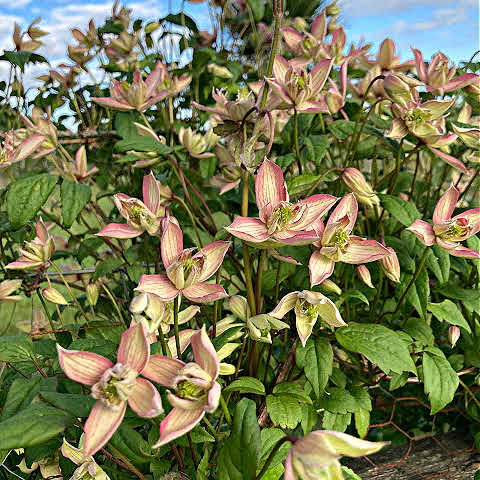
I planted this Clematis to grow over the porch of a home during the late 1980s and I’m delighted to have it again. In our current garden, it scrambles over a fence between a formal orchard and an informal forest garden. Like most Clematis montana, it is a vigorous, clinging climber that produces a mass of flowers in late spring and early summer. While ‘Marjorie’ is not known as having particularly fragrant blossoms, I think they have a light vanilla scent. Height 600cm (19ft8in). If you need to prune to keep it within an allotted area, do so immediately after flowering.
Grow in alkaline to neutral soil that neither dries out for long periods, nor is waterlogged. Clematis prefer their roots to be shaded and their top growth to be in sunshine. While they will grow well in partial shade, you’ll get the best display in full sun. Provide a support for it to cling to or allow it to scramble through a shrubbery or up a tree. Hardy across the UK and Ireland in all, but the harshest, of winters.
More information
The article about plants that soothe and lift the spirits was written for Amateur Gardening magazine and published in January 2026. I have updated some of the specific varieties and images and added further suggestions. Additionally, links are included to help you find the suggested plants.
If you want to find the tools, equipment and plant suppliers that we use, check out our Resources page that include discounts and special offers for readers of this blog.

- Plants to support wild birds - May 29, 2026
- 10 Plants with Apricot - May 8, 2026
- Garden flowers in November - May 3, 2026