
Plants to support wild birds
Plants to support wild birds in your garden. At RHS Chelsea Flower Show 2025, one of the gardens I really liked was the Songbird Survival garden. It was filled with ideas of plants and small projects that we can recreate in our own gardens to support dwindling songbird populations.
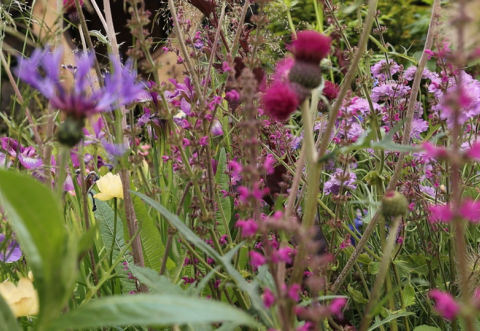
I’ve chosen a selection of plants that will attract pollinators, provide seeds or berries, has the potential for nesting material, or offer shelter to wild birds in your garden.
Sambucus nigra f. porphyrophylla ‘Gerda’
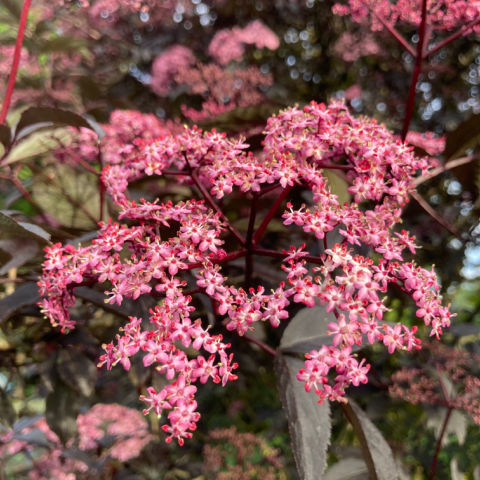
There are several dark leaved elderberries and they are all plants to support wild birds. ‘Gerda’ has dark purple leaves with pink flowers. Grow in full sun for the best show of colour. It is a deciduous shrub and the young green foliage quickly develops the dark colouring. This fully hardy shrub reaches 300cm height and 200cm spread and flowers during late spring and early summer, followed by dark purple berries. The cooked flowers and berries can be used in the kitchen for jellies, syrup and wine (do not eat raw flowers or berries). Hardy across the UK, Ireland and northern Europe.
Viburnum opulus
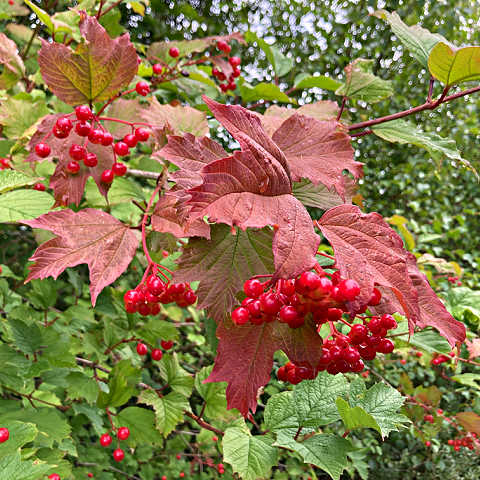
Often seen in hedgerows, this UK native species has a lot to offer in our gardens. A deciduous shrub that produces flat heads of white flowers in late spring and early summer. The leaves create a great show in autumn as they turn shades of red before falling. Scarlet red berries are produced during autumn and remain on the plant into winter, depending on how quickly the birds eat the berries. Height to 500cm (16ft 6in). Grow in any soil type, in full sun or partial shade. Hardy across the UK, Ireland and northern Europe.
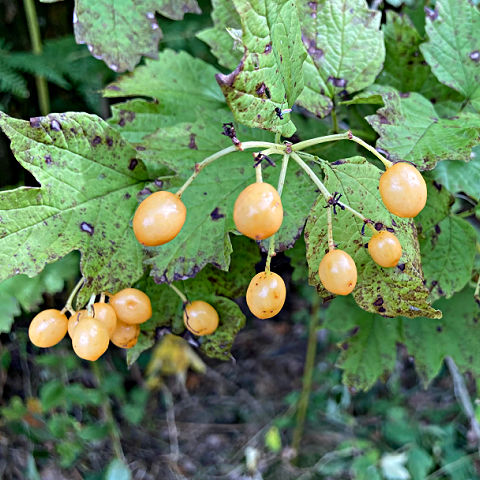
If you’d prefer yellow berries, choose Viburnum opulus ‘Xanthocarpum’.
Cirsium rivulare ‘Trevor’s Felley Find’
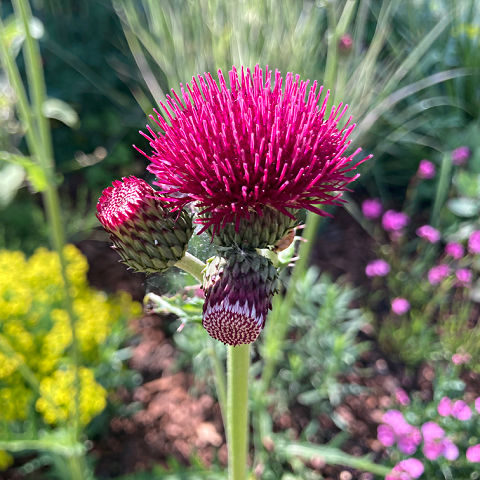
There are thistle plants of all sizes, from ground-hugging dwarf thistles to giant thistles that soar to over 240cm (8ft) tall. Cirsium rivulare ‘Trever’s Felley Find’, commonly known as plume thistle, is a perennial that grows to 120cm (4ft) height, making it ideal for many garden borders. It has silver-green leaves and during the summer, sends up purple-tinged stems topped with flower heads of purple-pink flowers. Deadheading will encourage further flushes of flowers.
The seed heads provide food for finches during the winter months, making them ideal as plants to support wild birds. Grow in any type of moist, but well-drained soil, in full sun. It prefers not to be on a north-facing site. It is hardy across the UK, Ireland and northern Europe.
I purchased at plant last year at Toby’s Garden Fest in Devon and it remains to be seen whether it has survived the winter on our cold, wet, north-facing hillside.
Dipsacus fullonum
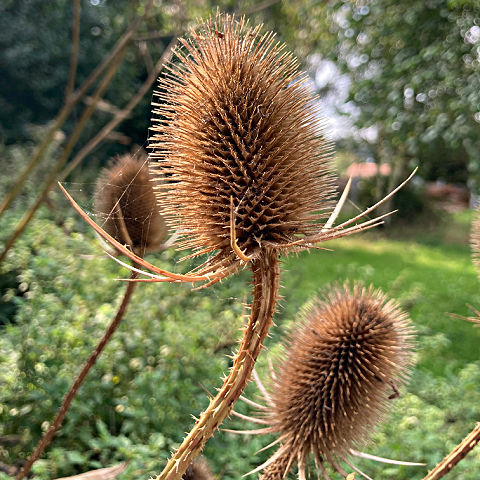
Instantly recognisable, teasels grow in banks, beside roads and near streams. Grown in our gardens, they can provide structure, winter interest and support wildlife. These biennial plants grow a mounded rosette of leaves the first year and during the second year, produce prickly flower stems up to 3m tall. The leaves are also prickly on the underside along the mid-rib.
Tiny flowers appear in rings around the flower head and the seed heads remain throughout the winter, providing food for wild birds, especially goldfinches. Grow on any soil type, even poorly drained soil and they will cope with an exposed site. Hardy across UK, Ireland and northern Europe.
Atriplex hortensis rubra
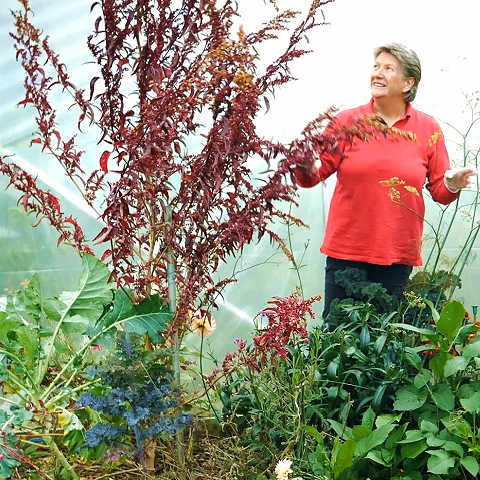
I’ve grown red Orach for years now and love the dark accents that it can provide in a border. It is an edible member of the spinach family, although I find the taste too strongly iron-y. It is an annual that self-seeds readily and it is the seeds that provide food for songbirds during autumn and early winter. Unwanted plants are easy to pull up and compost.
They usually grow to around 100cm (3ft3in), but one grew in my last garden to 180cm (6ft) or more. It prefers loam or sand soil that is well-drained. Grow in full sun, in a west- or south-facing position. It will tolerate cold weather, but not freezing temperatures.
Crataegus persimilis ‘Prunifolia’
The plum-leaved thorn or frosted thorn makes an excellent tree for medium to large garden, growing to 600cm (19ft8in) height and spread in around 10 years. It has dark green, almost shiny leaves and long thorns. In May, and sometimes June, it produces masses of small white flowers in followed by red berries in autumn. The leaves turn red, orange and gold in autumn. The thorny branches provide good nesting opportunities and the berries offer food to songbirds during autumn and early winter.
Grow in any soil type in full sun or partial shade. They are hardy across the UK, Ireland and the rest of Europe, even during the harshest winters. Birds and squirrels disperse the berries across the garden, for ease of removal, lift any unwanted seedlings when they are still fairly small. The seeds inside the berries are toxic, so need to be removed if you want to eat the berries.
Deschampsia cespitosa ‘Goldschleier’

I’ve grown Deschampsia cespitosa ‘Goldschleier’ for a few years and have been impressed with its performance. It’s perennial evergreen that forms a clump with arching blue-green leaves. From late spring or early summer, it produces flower stems with golden colour flowers that have a silvery sheen. The stems and seed heads stand for months. I tend to leave the flowering stems, but you can cut them down in late spring. Height 90cm (3ft) and 60cm (2ft) spread.
Centaurea montana
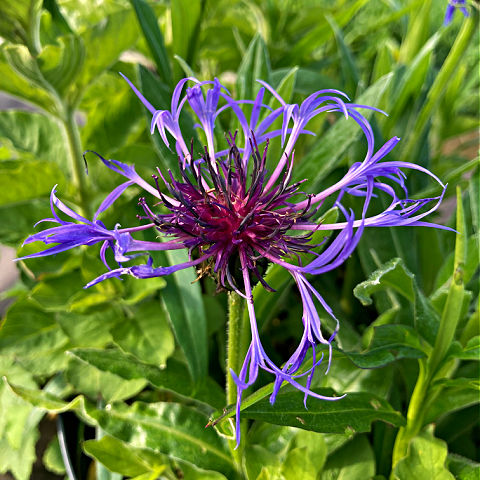
Perennial cornflower is an herbaceous perennial that forms a spreading mat of leaves, which are slightly hairy on the underside. The purple flowers are produced from late spring and into summer. Height 45cm (18in). Deadheading prolongs the flowering season. Grow on any moist, but well-drained soil, in full sun or partial shade. Hardy across the UK, Ireland and the rest of Europe.
There are several varieties, including white (Centaurea montana ‘Alba’) and for white with a purple centre, try a variety called ‘Amethyst in Snow’.
Crepsis rubra
The common name for this plant is pink dandelion and it’s easy to see why! An easy-to-grow annual for well-drained loam, sand and chalk soils. It may fail to thrive in a clay soil. Grow in full sun on a west- or south-facing site. Height 30cm (1ft). Grow in drifts for maximum impact. Not only are they eye-catching, but they attract pollinators to the garden, providing food for wild birds. Sow seeds inside during autumn and grow on in a cold frame, or wait until all risk of frost has passed before direct sowing into their final position.
Anchusa azurea ‘Loddon Royalist’
A spreading plant with deep blue flowers that appear in summer. This herbaceous perennial thrives in full sun and will tolerate partial shade. Grow in loam, sand or chalk soils that are moist, but well-drained. It prefers a sheltered spot away from cooling winds and may fail to thrive during wet winters. Height 90cm (3ft) and 60cm (2ft) spread. This is another plant for attracting pollinators to the garden.
Further information
The article about plants to support wild birds in your garden was written for Amateur Gardening magazine and published in March 2026. I have updated some of the specific varieties and images and added further suggestions. Additionally, links are included to help you find the suggested plants.
If you want to find the tools, equipment and plant suppliers that we use, check out our Resources page that include discounts and special offers for readers of this blog.

- Plants to support wild birds - May 29, 2026
- 10 Plants with Apricot - May 8, 2026
- Garden flowers in November - May 3, 2026