

10 Plants with Apricot
Plants with apricot flowers or leaves. As with so many things in life, fashions in the garden come and go, and I’m delighted that peach and apricot colours flowers have made a resurgence over the last decade. Grown together with similar shades, they make a restful and romantic colour scheme. Place them as a contrast with purples and blues, they will make the colour of each other stand out.
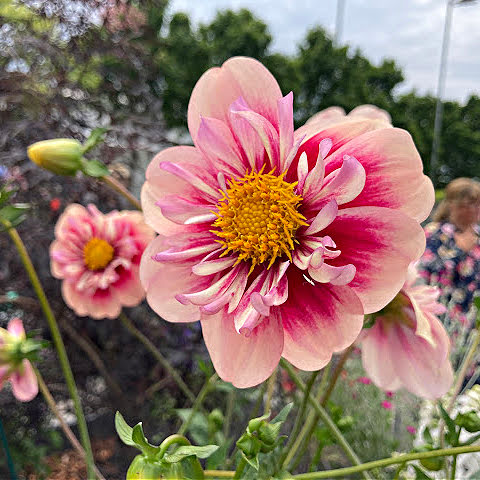
Whether you are looking for a deep peach that has shades of copper, or a palest apricot that has creamy pink tones, there are shades of peach and apricot to suit.
Dahlia ‘Henriette’
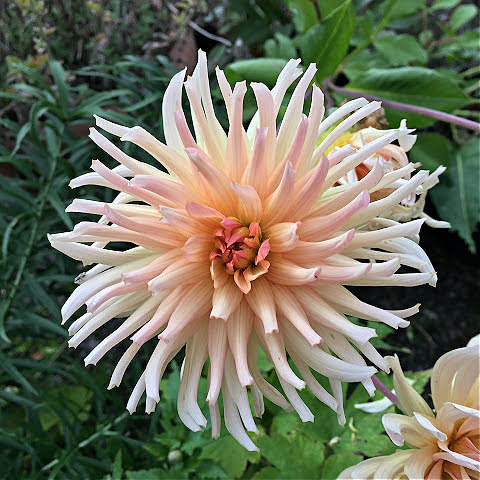
I first grew Dahlia ‘Henriette’ in 2019 and was delighted with the size of the blooms, which are about 12cm (5in) across. In the mild coastal area of our previous home, it happily stayed in the ground over winter, but on the wet, cold hillside we now live on, I lift dahlias in the autumn, as they are not frost-hardy. I store them under cover for the winter months, to prevent them from rotting in the ground.
These plants with apricot flowers make a statement in the border and are equally good in large pots. ‘Henriette’ grows to 100cm (3ft3in) height and 75cm spread. Grow in full sun in any soil except chalky soil. It prefers a south- or west-facing site in a sheltered position. Deadhead very regularly to encourage continued flowering and it should provide colourful blooms from the middle of summer to the first frosts.
Rosa ‘It’s a Wonderful Life’
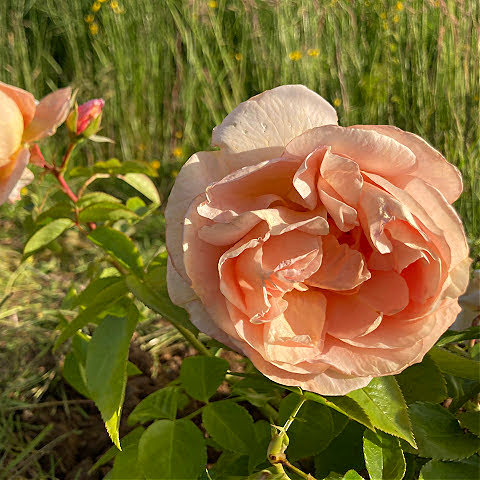
A repeat flowering floribunda rose that grows to bushy shrub of 90cm (3ft) height and 60cm (2ft) spread. The mid-apricot flowers are actually a mixture of pink, orange and peach, which can vary in intensity depending on the temperature. Each flower is up to 10cm (4in) across and they have a gentle fragrance. For best results, grow on a west- or south-facing site, in full sun or partial shade. It is unfussy about site or position, although avoid planting in very dry or waterlogged soil, and is hardy across the UK, Ireland and the rest of northern Europe.
Digitalis obscura ‘Dusky Maid’
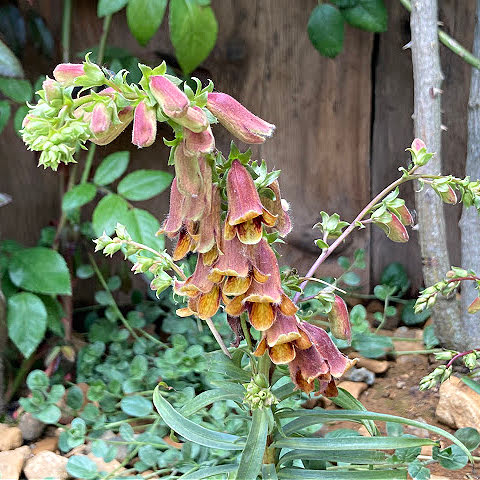
Here’s an interesting foxglove. They are semi-evergreen perennial plants with apricot tones, that produce flowers from spring through to late summer. The flowers are dark yellow, peach and burnt orange in colour. The flower spikes grow to a height of 60cm (2ft). Grow in full sun in a sheltered spot, in well-drained soil, avoiding clay soils. It is drought-tolerant and hardy in coastal and milder areas of UK, where temperatures do not reach below -5C. All parts of the plant are toxic and therefore should not be eaten.
Heuchera ‘Marmalade’

These plants with apricot leaves make a big splash! Heuchera ‘Marmalade’ is an evergreen perennial with slightly ruffled leaves that have peach tones to the upper side of the leaves and a pink underside. It grows to 25cm (10in) tall and 45cm (18in) spread, thus making it idea for the front of the border and edging pathways.
Heucheras are susceptible to vine weevil attack, check pot grown plants regularly and remove the creamy-white vine weevil larvae. And increasingly, can be susceptible to Heuchera rust, but otherwise they are relatively trouble-free. Propagate heuchera from cuttings of healthy plant material.
Antirrhinum majus ‘Doubleshot Peach’

Snapdragons were the first flower that piqued my interest in the garden. As a small child my father showed me how the sides of the flower could be gently pressed and the petals would open to reveal the centre. But not understanding that this didn’t apply to all flowers, I promptly ‘popped’ open all the fuchsia buds next to the snapdragons. I don’t suppose he was hugely impressed with my efforts! To this day, I still have a special place in my heart for snapdragons as the plants always prompt that memory of a shared moment with my father.
Antirrhinum majus ‘Doubleshot Peach’ grows to 50cm (20in) height and 40cm (16in). The blooms are yellow, peach and orange and have a fruity fragrance. In very mild areas, it may overwinter, but treat is as a half-hardy annual to avoid disappointment. Grow in full sun or partial shade in any moist, but well-drained soil. It is unlikely to thrive in clay soils.
Rhodanthemum hosmariense ‘Zagora Orange’
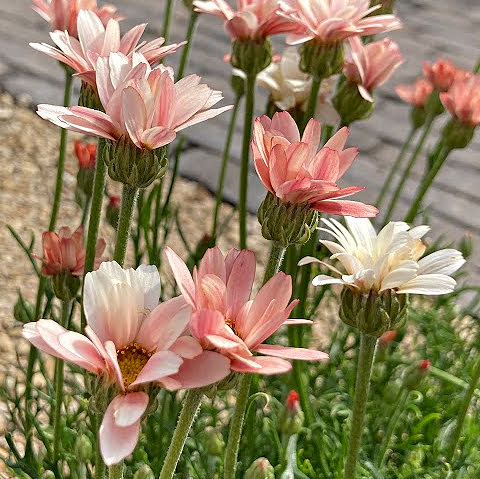
The Moroccan daisy forms an evergreen mound of ferny foliage and from May to autumn produces apricot daisy flowers. Height and spread 30cm (12in). Grow in full sun, in well-drained soil, it is unlikely to thrive in clay soil, nor where the ground is waterlogged. Once established, Rhodanthemum hosmariense ‘Zagora Orange’ is drought tolerant. Hardy in most of UK and Ireland except in a severe winter. If your soil is heavy or wet, you can grow them in pots, either on a patio or nestled among other plants in a border
Acer palmatum ‘Taylor’
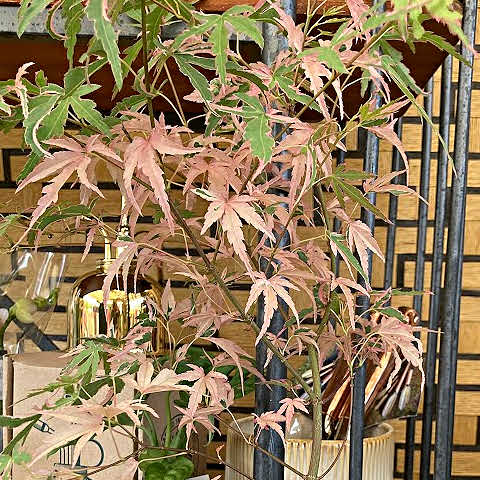
Here’s one of the larger plants with apricot hints. A slow-growing, deciduous tree that has apricot pink young leaves, however, as they age, the leaves turn green with white edges. Grow in partial shade in any soil except chalky soil. It prefers moist but well-drained site that is west- or south-facing. Height and spread 200cm (6ft 7in). Hardy across the UK, Ireland and the rest of northern Europe. I saw an almost fully-grown specimen growing in a large container at RHS Malvern Spring Festival, which illustrated how good this tree would be on a patio, balcony or courtyard garden.
Iris ‘Constant Wattez’
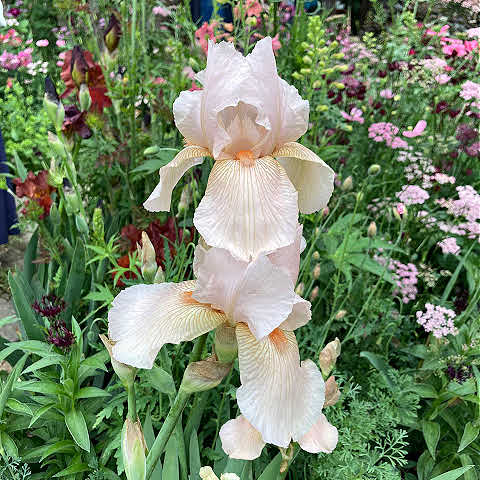
I saw this beautiful iris in The Glasshouse Garden, designed by Jo Thompson, at RHS Chelsea 2025 and loved the subtle colours. Iris ‘Constant Wattez’ flowers from late May and grows to 90cm (3ft) height. The flowers are palest pink with tan feathering and an orange beard, giving it an overall pale apricot look. An herbaceous perennial with blue-grey leaves that prefers full sun and acid to neutral soil. Grow in loam or sandy soil, in a sheltered, south- or west-facing position. Hardy across UK, Ireland and the rest of Europe.
Verbascum ‘Peach Champagne’
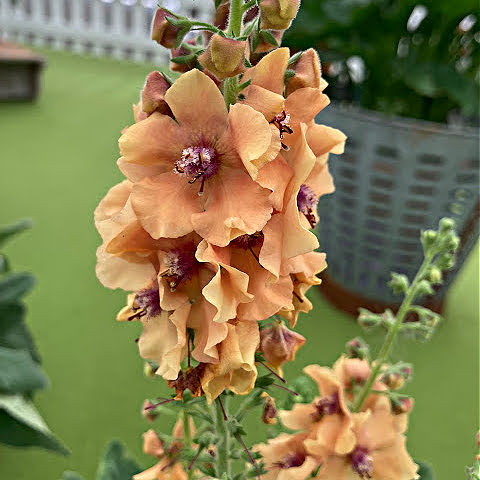
A semi-evergreen short-lived perennial that forms a rosette of leaves from which the flower spikes appear during late spring and through summer. Grow in alkaline to neutral soil that is well-drained. It will thrive in poor, gravelly soils. I have one growing in a raised bed that I suspect is too nutrient-rich as it produces an abundance of leaves and just a few flower spikes. Height 50cm (20in) and 30cm (12in) spread.
As with all Verbascum, it can become home to mullein moth caterpillars. Remove by hand if necessary. However, I tend to leave them and sufficient numbers are taken by birds
Tropaeolum majus ‘Tip Top Apricot’
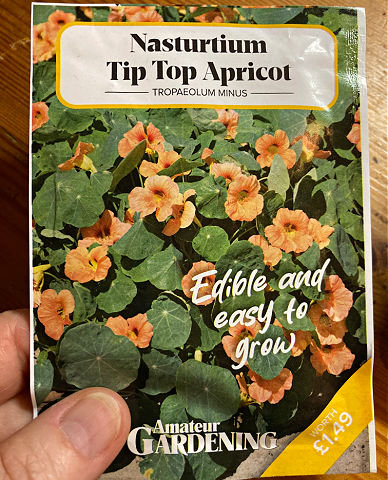
For an easy-to-grow splash of apricot colour in the garden, try Nasturtium ‘Tip Top Apricot’. There was a free pack of seeds on our festive issue in December. This is trailing annual is a compact plant that grows to 30cm (12in) height and 75cm (30in) spread. For best results, grow in full sun in moist, but well-drained soil. Nasturtium are not frost-hardy, so sow seeds under cover or indoors in spring and plant out once all risk of frost has passed. The leaves and flowers are edible, as are the immature seeds, which can be pickled and used an alternative to capers. Additionally, nasturtiums make great decoy plants as they are attractive to cabbage white butterfly and cabbage moth. Plant them away from brassicas in your vegetable garden to dissuade egg-laying on your food plants.
More informationn
The article about 10 plants with apricot flowers or leaves was written for Amateur Gardening magazine and published in January 2026. I have updated some of the specific varieties and images and added further suggestions. Additionally, links are included to help you find the suggested plants.
If you want to find the tools, equipment and plant suppliers that we use, check out our Resources page that include discounts and special offers for readers of this blog.

- Plants to support wild birds - May 29, 2026
- 10 Plants with Apricot - May 8, 2026
- Garden flowers in November - May 3, 2026