

Autumn Groundcover
This article explores some great autumn groundcover plants. With ideas for colour and texture for your garden during the fall months.
Mulching with a layer of organic matter does a great job at protecting soil from the elements and adding nutrients back into the soil. And groundcover planting can be even better. The roots of plants hold soil in place better than just a top layer can. And the continuous activity between plant roots and microbiome add to the long-term stability and health of the soil. It’s a win-win!
You could use a green manure as ground cover. Sow the seeds and then chop back and either leave it on the soil or mix it into the first few centimetres of soil. But in my mind, that’s a lot of work each year. Plus, it has the potential to disturb the soil more than necessary, and the soil is not protected from the elements until the young plants have grown sufficiently.
Permanent ground cover plants start doing their thing almost from the moment you plant them. Plant autumn groundcover now and you can start protecting the soil and microbione right away.
Here’s a selection of plants to provide attractive ground cover during autumn and beyond.
Cyclamen hederifolium

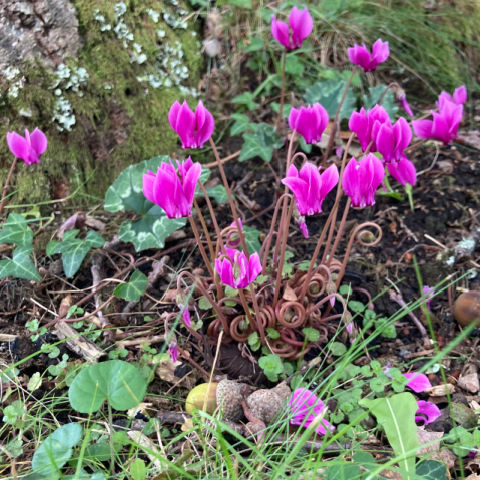
Ivy-leaved cyclamen plants produce flowers in late summer and autumn, before the leaves appear. The flowers are usually pink, but I’ve seen white flowered examples too. The leaves have an ivy-shape and are patterned with silver and green. They provide groundcover from autumn and through the winter. As the flowers produce seeds, the flower stems curl into a tight spring, adding even more interest. Grow in any type of well-drained soil, in a sheltered position, preferably in partial shade. Hardy in most places in UK and Ireland. I grow cyclamen between and beneath summer flowering herbaceous perennials.
Ajuga reptans ‘Multicolor’ (v)
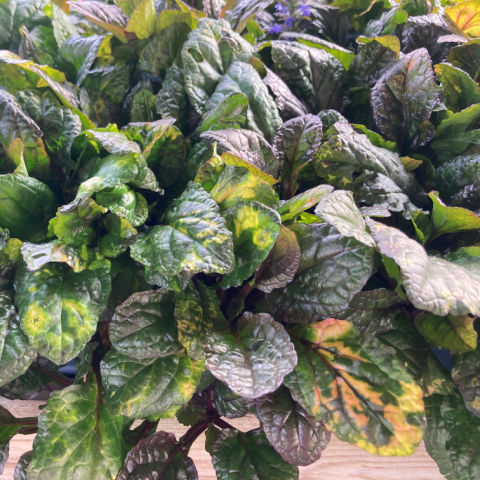
Often found in garden centres as ‘Rainbow’ or ‘Tricolour’, this plant forms a dense mat of bronze-green leaves that are streaked, splashed or spotted with cream and pink. It is an evergreen, so will continue to provide cover and colour throughout the year. Dark blue flowers are produced in late spring and early summer. It’s a ground-hugging plant that reaches 8cm-15cm height and up to 60cm spread. Grow in loam or clay soil, that is moist, but well-drained or poorly drained. It is happiest in partial shade or full shade, in any aspect except a south-facing site. Hardy across UK, Ireland and Europe. May naturalise given the right conditions.
Lobelia pedunculata

I saw this blue flower at Kew Gardens, where it had formed a large carpet of colour across the ground. Also known as Pratia pendunculata, it grows to 2cm – 4cm tall and 150cm spread. It forms an evergreen mat of small leaves above which the small flowers appear in summer. Because it is such a vigorous plant, there is a potential for it to become a bit of a nuisance. It is hardy throughout most of the UK and prefers a sheltered site in shade or partial shade. Although the plants I saw at Kew had little shade and were thriving.
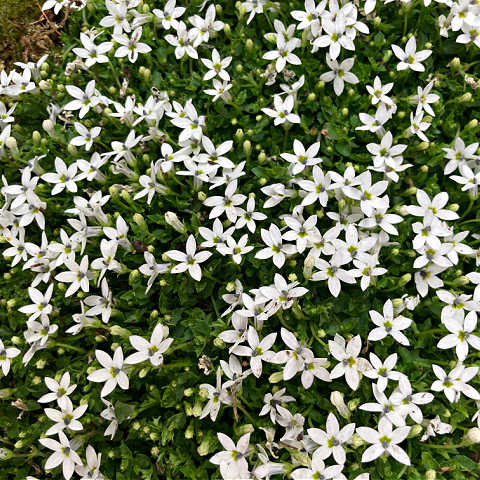
The white variant is just as lovely; I spotted this one at the Royal Welsh Show in July. Although they won’t be in flower during autumn, they make great groundcover plants.
Bergenia purpurascens var. delavayi
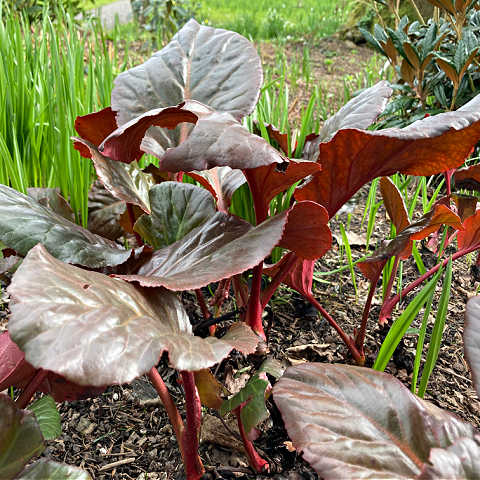
For many years, I didn’t like what we called elephants’ ears plants, and they seemed to be in every suburban garden in the corner of Gloucestershire in which I grew up. However, having seen them providing groundcover in shrubberies and on the edges of woodland gardens, I now understand their appeal.
The thick, rubbery leaves are dark green to bronzy-purple, which often intensifies as the temperatures drop, as long as there are good light levels. They have a slightly erect habit to 40cm height and will form a ground covering clump up to 5ocm spread or more. Clusters of white or pink flowers appear on erect stems in spring. Grow in full sun or partial shaded. They prefer loamy, moist, but well-drained soil. They may fail to thrive in clay and chalk soils.
Thymus serpyllum var. albus
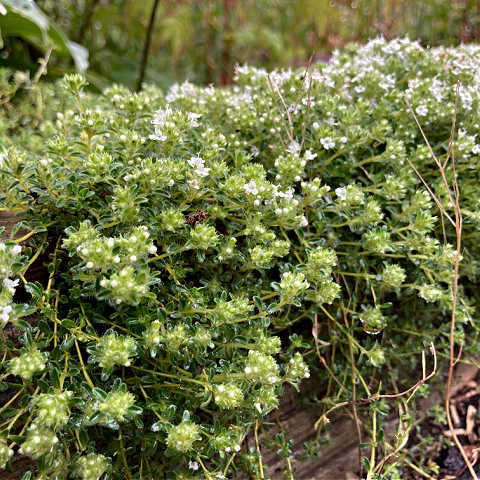
White creeping thyme forms a dense mat of evergreen foliage that hugs the ground and often roots into the ground where the stems touch it, anchoring it firmly in place. It grows to around 4cm height and 40cm-60cm spread. The dark green leaves are aromatic and during summer it produces clusters of tiny, white flowers. Grow in chalk, loam or sandy soil that is well-drained in alkaline or neutral. Position in full sun. Hardy throughout most of UK and Ireland, although it may not survive a severe winter.
Deschampsia cespitosa ‘Goldschleier’
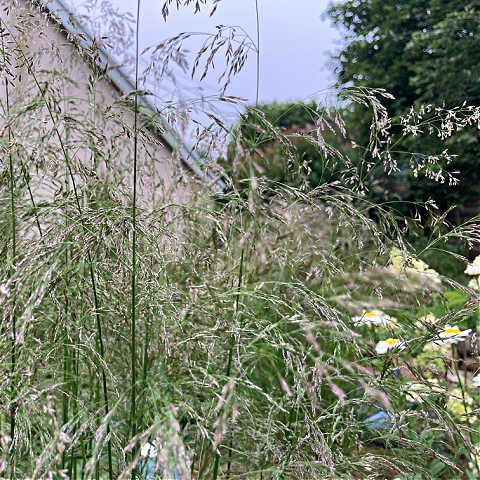
Ornamental grasses are ideal for use as ground cover and their seed heads can provide added interest throughout autumn and winter. Deschampsia cespitosa ‘Goldschleier’ is a perennial evergreen that has fine arching blue-green leaves. From late spring or early summer, it produces flower stems with golden colour flowers that have a silvery sheen. I tend to leave the flowering stems, but you can cut them down in late spring. Height 90cm and 60cm spread.
Saxifraga × arendsii
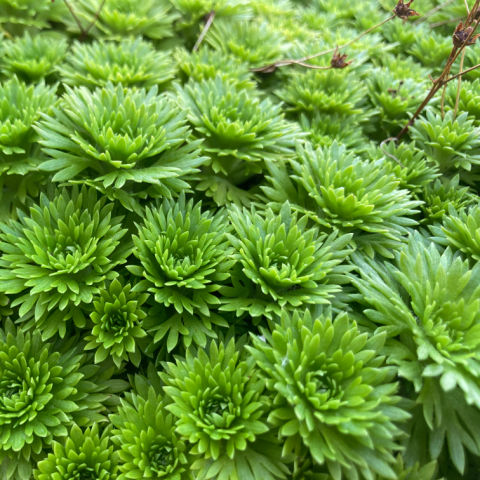
This low growing plant forms a dense mat of leaves and produces masses of very small flowers in late spring and early summer. Flower colour depends on variety, but are usually red, pink or white. However, I think it comes into its own in autumn because the small rosettes of leaves stay a fresh green colour, while much around it is starting to die back. It requires neutral to alkaline soil that is well-draining and will fail to thrive of heavy or clay soils. Grow in full sun or partial shade in a west- or south-facing, sheltered spot. Hardy throughout UK and Ireland, even in severe winters. Easy to propagate by removing individual rosettes and rooting them. Height 15cm and 30cm spread, making them ideal for growing at the front of the border.
Stachys byzantina ‘Silver Carpet’
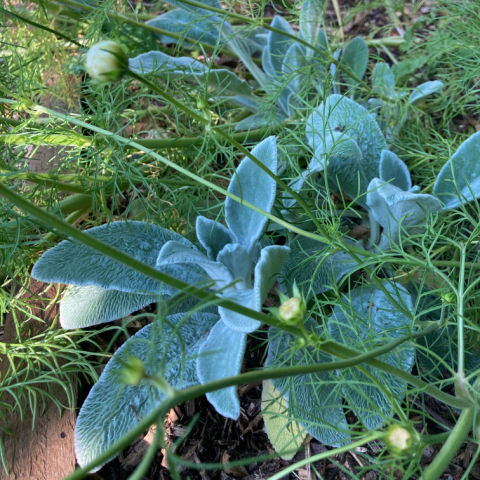
Lamb’s ears have distinctive, evergreen, silver foliage that is soft and downy. If you can provide a south- or west-facing position, in full sun and well-drained soil, it will reward you with a spreading carpet of thick, lush growth. Stachys byzantina is likely to fail to thrive on clay soils. Pink or mauve flowers appear in summer; they grow in whorls at intervals around the flower stem. It grows to 50cm height and 100cm spread. It is fully hardy in the UK and across most of Europe.
More ideas
The article, Autumn groundcover, was written originally for Amateur Gardening magazine in 2025. I may have updated some of the specific varieties and images, or added further plants to the list and I’ve included to help you find the suggested plants. This blog contains plenty more ideas for your garden, including for evergreen groundcover.

- Plants to support wild birds - May 29, 2026
- 10 Plants with Apricot - May 8, 2026
- Garden flowers in November - May 3, 2026