

Hard working plants
Plants that work hard, so you don’t have to! I prefer to spend my time in the garden enjoying it, watching nature and experiencing the sights and scents, rather than constantly busy doing things. And so, I think hard working plants that spread vigorously or self-seed readily are a bonus. They add more colour, more foliage, and smother weeds at the same time.
The one down side to these prolific and hard working plants, is that they can outgrow their allotted area quite quickly. So be cautious of planting too many of them if your space is limited or they may create more work than they save!
Lamium maculatum ‘Pink Pewter’
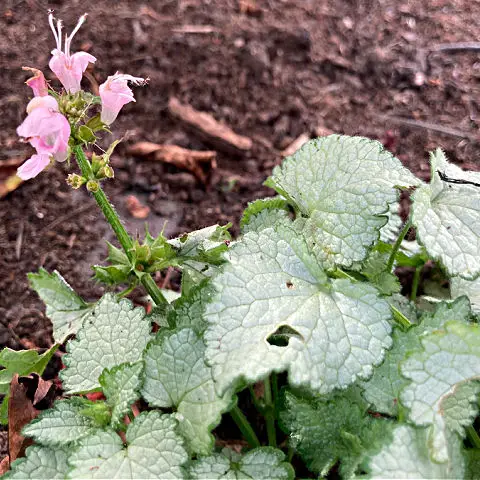
A silver and green leaved evergreen ground cover plant with delicate flowers. Lamium maculatum ‘Pink Pewter’ has pale pink flowers, but there are plenty of other varieties offering a selection of flower colours. A low-growing plant, height 10cm and spread 60cm, it produces pale pink flowers from summer to early autumn. Grow in partial or full shade, preferably in a sheltered spot (although it grows quite happily in my garden on a windy hillside). It will grow in all soil types, and for best results, avoid a south-facing aspect.
Peltaria alliace
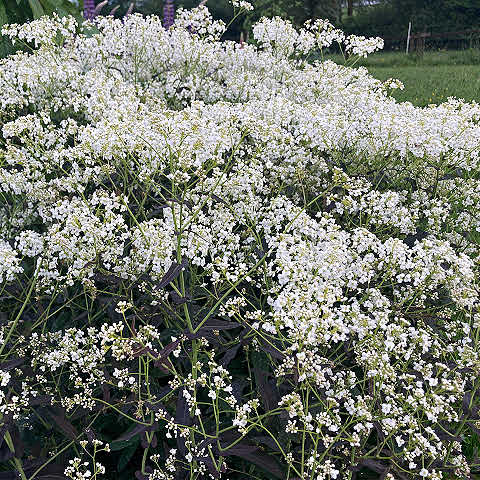
Here’s one to grow with some caution, but if you have a large area to fill, or are prepared to remove any unwanted growth, it will reward you with a froth of white flowers in late spring and very early summer. Garlic Cress is a perennial edible, the leaves have a mild garlic flavour and can be harvested over the winter months, before it starts producing flower stems to 100cm height. I included one small 9cm pot plant in a bed and within 18 months it covered an area around 1 metre square.
Diascia ‘Hopleys’
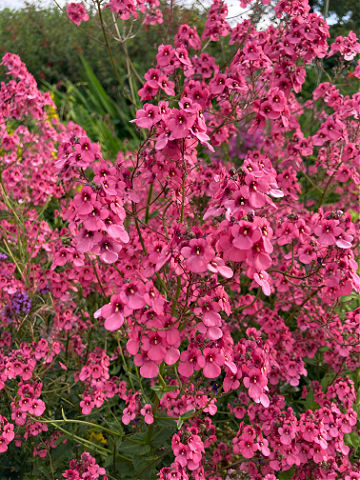
This perennial form of Diascia grows to 90cm height and 60-75cm spread and produces masses of flowers from late spring to autumn. Grow in alkaline or neutral soil that is not heavy clay. It prefers full sun and a sheltered spot on a west- or south-facing aspect. It can still do very well in a sheltered spot in other aspects in a warm year. Hardy throughout most of UK and Ireland, although it may not survive a severe winter. I think this is worth growing for the sheer number of cheerful flowers produced on the upright stems.
Calendula officinalis
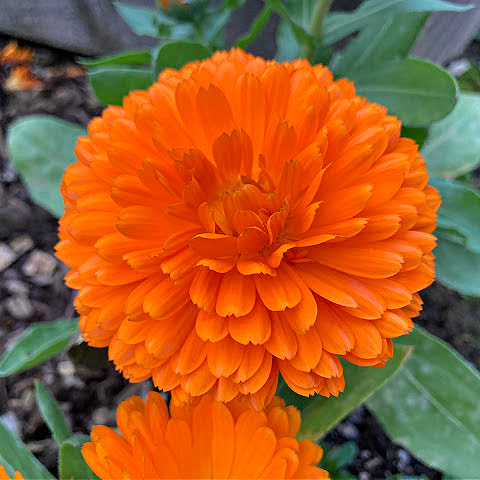
Common or pot marigold is usually grown as an annual. These hard working plants self-seed freely and seedlings can be transplanted. Available in a range of flower forms and colours, the common or pot marigold has a simple daisy-like flower. Grow in full sun or partial shade on any soil, except heavy clay. They are drought-resistant and will fail to thrive in constantly wet soils. Calendula officinalis is hardy throughout most of UK and Ireland. As a bonus, the petals are edible and can also be used in homemade cosmetic products.
Geranium maculatum Stormy Night (‘Macger002’) (PBR)

Hardy geraniums are herbaceous perennials that increase the size of the clump over the years. They grow outwards from the centre, so you may find that they need lifting and dividing every few years. They are good as groundcover and can provide plenty of colour interest in their leaves and flowers. Try Geranium ‘Stormy Night’ for mahogany-bronze foliage with bright purple flowers, which grows to 50cm height and 45cm spread. It is unfussy about soil type, but prefers well-drained soil in full sun or partial shade. I included this variety in a microgarden created for the Horticulture Village at Royal Welsh Show 2025.
Myosotis sylvatica

For hard working plants for great spring colour, look no further than the Forget-me-not. The flowers are a delightful soft blue with tiny buttery yellow or white centres. And while the individual flowers are small, they are produced in such an abundance that the they appear as a froth of blue floating above the slightly hairy foliage. Height 30cm. Myosotis sylvatica is perennial in many areas, but is often grown as a biennial. I like to leave the flowers on the plants until the seeds are fully formed and then shake the old plants vigorously as I lift them from the beds. This scatters the seeds across the beds to provide plants and flowers for the following seasons. Plant in partial shade, although they will often tolerate full sun, in any soil except clay. Hardy across the UK and Ireland.
Solidago ‘Goldenmosa’
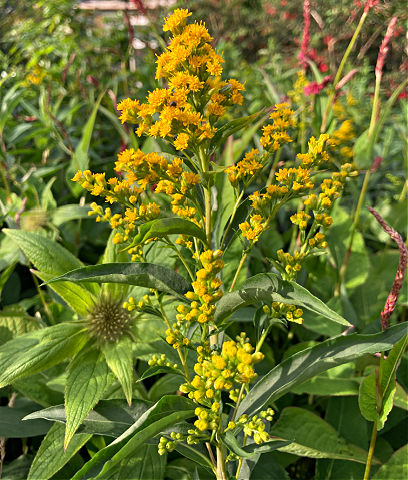
I look forward to seeing the bright yellow flowers of goldenrod appear in mid and late summer. They remind me of a gold frothy cloud above the foliage. Some varieties of Solidago can be invasive, so careful selection is recommended. ‘Goldenmosa’ reaches 75cm height and 30-50cm spread. Grow in full sun on well-draining, acid or neutral soil. The plants will tolerate soil that has low to moderate fertility and an exposed site. Although it prefers a south-facing aspect, I have seen them grow in a wide range of positions and conditions.
Lysimachia clethroides

Gooseneck loosestrife is ideal for damper spots in the garden. If it even happy in soil that has poor drainage. The small off-white flowers are produced at the top of thin terminal spikes. An herbaceous perennial that dies back after it has flowered in mid to late summer. It will grow on any soil type, in full sun or partial shade and prefers a sheltered spot in any aspect except north-facing. Hardy across the UK and Ireland. Height and spread 90cm.
Bistorta Officinalis
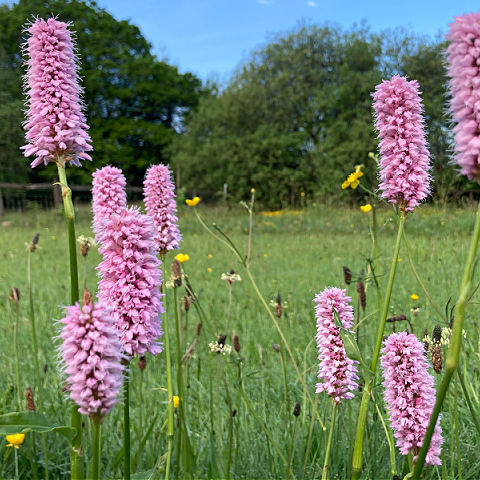
For a mass of delightful pale pink flower spikes to 75cm height, Bistorta officinalis is one the really hard working plants. It rarely fails to please and can be considered a cottage garden classic. It spreads vigorously, giving a better display year after year, which attracts pollinators. Propagate by division in spring or autumn. It is unfussy about soil type and will grow in full sun or partial shade. It prefers not to grow in a north-facing aspect, although it does well in our garden which is north-facing, but open. Fully hardy throughout UK and Ireland.
Achillea millefolium ‘Cerise Queen’

Achillea grow to fill a large area filled with fragrant, almost pungent, foliage with flat heads of clusters of tiny colourful flowers. Highly attractive to pollinators, Achillea are fast-growing, robust plants with spreading roots. Achillea are available in a wide range of colours from white to yellow and red. ‘Cerise Queen’ has vibrant pink petals that fade to pale pink or white as the flowers age. They prefer not to be in wet soil during winter, but are otherwise, fully hardy. Height and spread 60cm.
More information
The article about hard working plants was written for Amateur Gardening magazine in summer 2025. However, I may have updated some of the specific varieties and images. Additionally, links are included to help you find the suggested plants. You can also look at some great bulbs for summer and autumn colour.

- Daisy flowers for autumn - January 2, 2026
- Flowers at Christmas and mid winter - December 31, 2025
- Autumn Groundcover - December 19, 2025