

Daisy flowers for autumn
Every year, I wish I had planted more daisy-like flowers, in particular, because they can fill our gardens with strong, rich colours at the end of summer and during autumn. The light from the sun is more mellow than during high summer and the whole garden takes on a glorious glow. Autumn hasn’t fully kicked in quite yet, although the night temperatures are distinctly lower. However, there is still plenty of time to be spent in the garden, enjoying the flowers, wildlife and harvests.
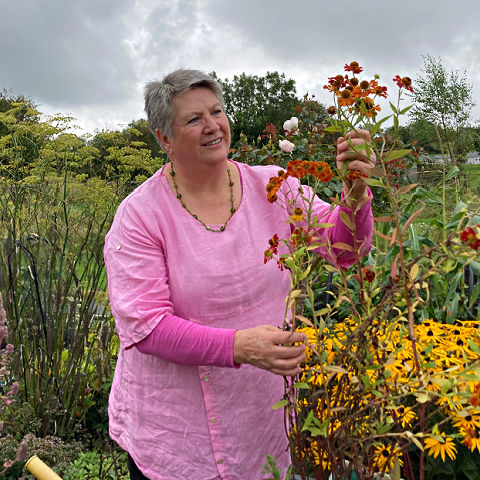
Daisy shaped flowers usually have a central part of disc florets surrounded by ray florets, which I think of as their petals. The showy ray florets may gain our visual attention, but insects are more interested in the central disc, where all the nectar is kept.
There are daisy-like flowers available for blooming throughout most of the year, and in this selection, I have chosen some of my favourite herbaceous perennials, an annual and an evergreen, for late summer and autumn displays.
Rudbeckia fulgida var. sullivantii ‘Goldsturm’
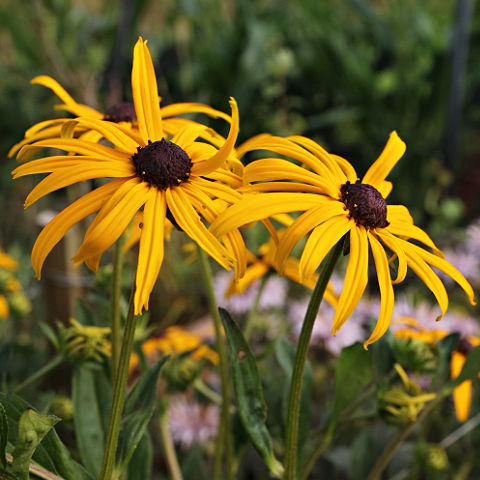
I have two large clumps of this Rudbeckia in my vegetable garden. By August and through the autumn, their rich, golden yellow colour, with dark centres, stands out among all the dark greens of the veg and pale mauves of thyme and oregano flowers. Grow ‘Goldsturm’ in any moist, but well-drained soil, although it is unlikely to thrive on sandy soils. It prefers full sun or partial shade. It is hardy throughout UK, Ireland and northern Europe. Height 60cm and 45cm-60cm. The plant in my garden has reached 60cm spread in three years and is ready to divide in spring and plant in other areas of the garden. If you leave the seed heads and stems intact for winter, they can provide extra structure and interest.
Symphyotrichum novae-angliae ‘Andenken an Alma Pötschke’
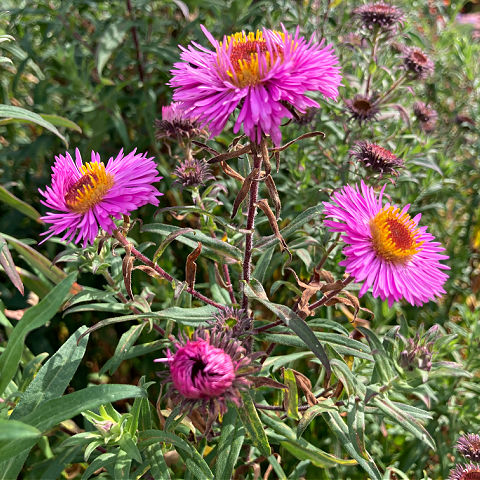
Previously known as Asters, these are the plants that helped me fall in love with gardening and for good reason! They are easy-going, fully hardy plants, and will thrive in full sun and partial shade. Available in a range of colours, but for a strong statement in the border, try ‘Andenken an Alma Pötschke’ with its strong pink ray florets and golden yellow disc florets at the centre. Year after year, the plant spreads and provides a more striking display. Height 90cm -120cm and spread 120cm – 150cm. Propagate by division in spring and they also grow easily from cuttings.
Rudbeckia Laciniata ‘Juligold’
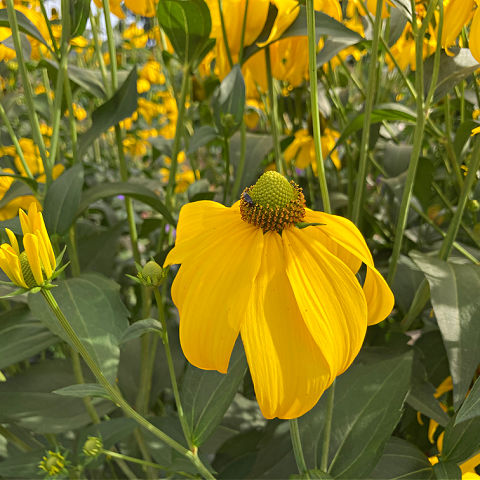
For the back of the border or a statement plant, Rudbeckia Laciniata ‘Juligold’ will fill the role. I has sunny yellow petals and a green centre. Grow on clay or loam soil in full sun. It will need a sheltered position because it can grow to over 200cm height and 90cm spread. I spotted a great display of ‘Juligold’ flowers at Llysdinam Gardens in Powys at the end of August.
Echinacea purpurea
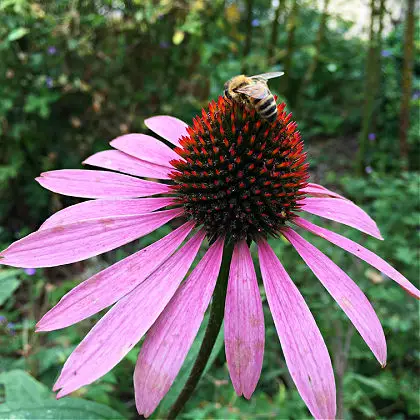
An upright plant with flowers up to 12cm across. The central disc is golden brown and the pinky-purple rays are slightly reflexed (meaning they curve down towards the stem). This is another plant for the centre or back of the border and, as they dislike disturbance, it is worth planting them in the right location the first time. Height up to 150cm, 50cm spread. Grow in full sun on chalk, loam or sandy soils that are well-drained. Echinacea is unlikely to survive in constantly damp soil. Early in the flowering season, remove the spent blooms to encourage more flowers, but later on, leave the flowers to form seed heads which can remain on the plant over winter to add seasonal interest to the garden and provide food for wildlife. Cut dead stems back in mid to late spring.
Helianthus ‘Lemon Queen’
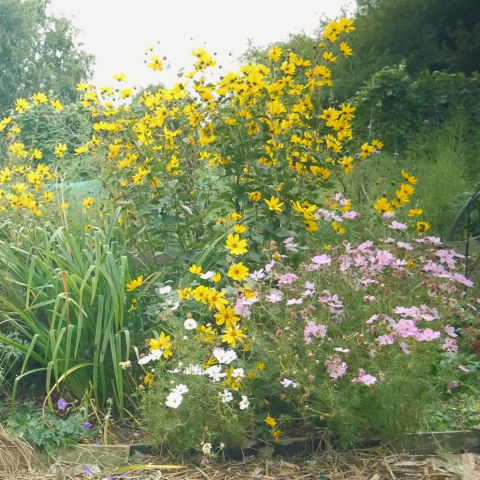
We had a large clump of this lovely, light yellow flowered Helianthus in our last garden and I’ve just bought some more.
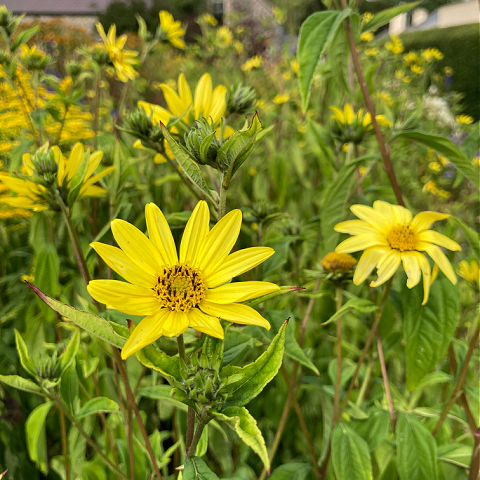
‘Lemon Queen’ grows to 200cm tall and 100cm or more spread. Grow in full sun on chalk, clay or loam soil that is alkaline or neutral. It will require some protection from winds because of its height. Alternatively, stake well and be prepared for some breakages in windy weather. Hardy across most of the UK and Ireland, although it may not survive a severe winter.
Gerbera garvinea ‘Cheeky Red’
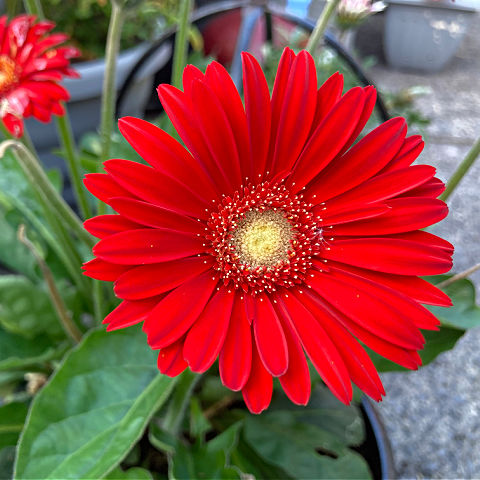
There are only a few hardy gerbera varieties, but I think the cheerful colour and number of flowers produced on each plant makes Gerbera garvinea ‘Cheeky Red’ worth protecting during the winter months. It may survive the winter outside in the warmer parts of UK. Grow near the front of the border or in pots, in well-drained soil in full sun. Height and spread 30cm. The flowers on these compact plants are smaller than the gerbera blooms found in florist shops, but they produce plenty of blooms from June until the first frost.
Coreopsis verticillata ‘Grandiflora’
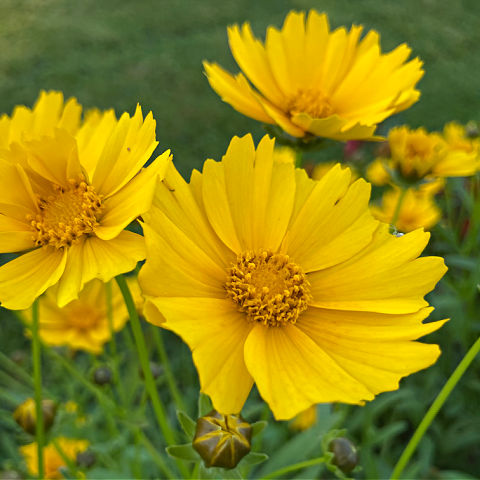
Commonly known as tickseed, Coreopsis verticillata ‘Grandiflora’ has fine, almost thread-like foliage and carries the flowers on stems held above the foliage. Flowers are 3cm – 5cm across and appear in mid to late summer. Regular deadheading will encourage continued flower production well into autumn. Grow in full sun or partial shade in well-drained soil. It may fail to thrive in clay soils. Height and spread 60cm. Hardy throughout UK and Ireland.
Symphyotrichum novi-belgii ‘Marie Ballard’

I am always excited to see the clump of ‘Marie Ballard’ in our garden come into flower. Their mauve colour is intense and stands out across the garden. The central disc is a strong buttery-yellow. I find the stems a little wiry for the weight of the 5cm flower heads and think it is worth providing support, so that the plants don’t flop too much. Height 90cm and 75cm spread. It grows well on most soils that are moist, but well-drained and is happy in full sun and partial shade. Hardy across UK, Ireland and northern Europe.
Stokesia laevis ‘Mary Gregory’
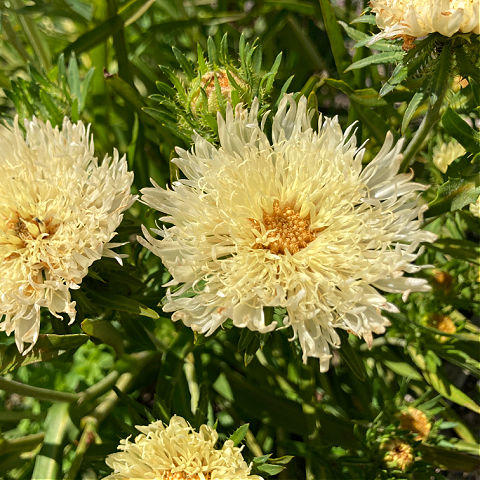
Yellow Stoke’s aster is an evergreen plant, rather than an herbaceous perennial, but worth including in this list of daisy flowers for autumn, for the interesting colour and frizzy-looking ray florets. It flowers from July to September. 45cm height and 30cm spread. Grow in full sun on loam or sandy soil that is acid or neutral. Avoid north-facing sites. Hardy across most of the UK and Ireland, but may not survive if temperatures fall below -10C.
Helenium ‘Septemberfuchs’
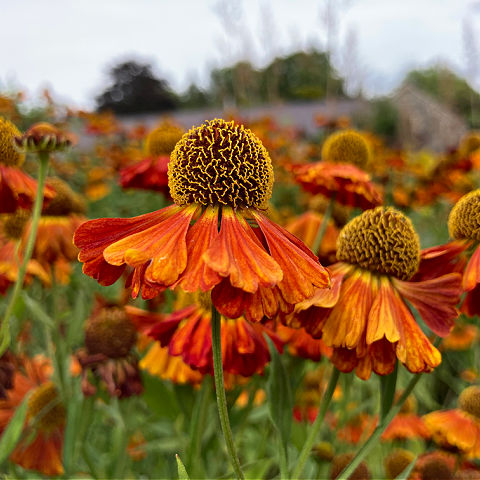
Helenium flowers from mid-summer to mid-autumn with a riot of bright daisy-like flowers that have a red, orange and yellow petals around a dark centre. Varieties offer a range of sizes from knee high to towering. ‘Septemberfuchs’ grows to 150cm – 170cm height and 150cm spread. Unfussy about soil type or situation, it prefers a west- or south-facing site. It is hardy throughout UK and Ireland, even during the most severe winters. Deadhead regularly to prolong the flowering period.
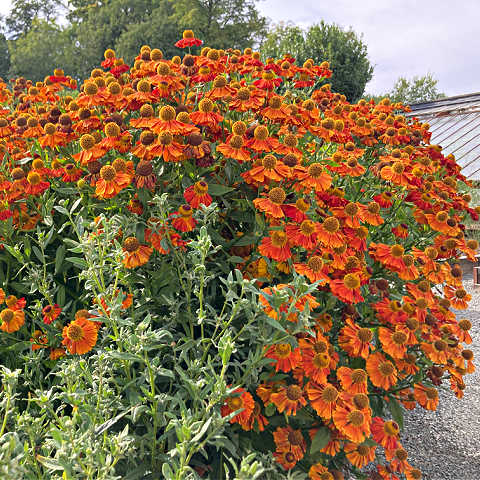
I spotted this plant (believed to be ‘Septemberfuchs’) at Llysdinam Gardens, where head gardener, Becky, informed me that they are consistently very tall.
Glebionis coronaria

Often grown for its edible young foliage, known as chop suey green. The cheerful yellow and white flowers, occasionally all yellow, are carried above the foliage. It’s an easy to grow hardy annual and, for earlier flowering, sow seeds in autumn. Grow in full sun on any soil type and on any aspect. It prefers moist, but well drained soil. Height 100cm, spread 20cm – 50cm.
My garden has plenty of this attractive flower in it, because I put plants that had gone to seed in my compost bin and didn’t raise the temperature in the bin sufficiently, so the seeds were returned to my garden in the compost. But I don’t mind, I like their cheery flowers swaying in the breeze.
Leucanthemum x superbum ‘Wirral Supreme’
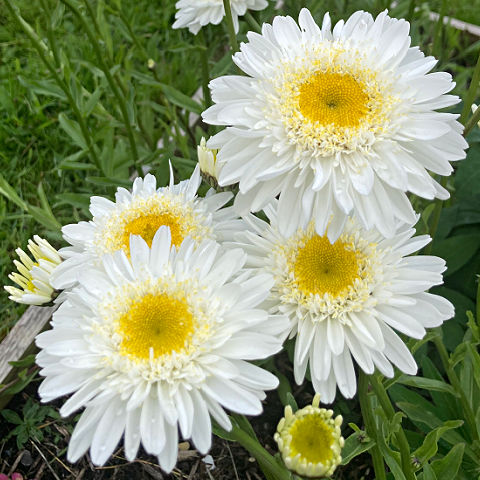
These clump-forming shasta daisies can be vigorous, but are easy to keep in check by lifting and dividing in spring. I like the splash of bright white that they add to the summer border. Dead head after the first flush of flowers to encourage a second display in early autumn. Leucanthemum x superbum ‘Wirral Supreme’ grows to 70cm – 90cm high and has flowers that are 10cm across. The flowers are highly attractive to flying insects. Grow in full sun or partial shade, on any moist, but well-drained soil, preferably in a sheltered position. Place between other plants or provide support, to prevent stems flopping over in the wind.
More information
The article about Daisy flowers for Autumn was written for Amateur Gardening magazine and published in autumn 2025. I may have updated some of the specific varieties and images and added further suggestions. Additionally, links are included to help you find the suggested plants and links to purchase via Amazon are included in brackets where available. Find more salad leaves, like the chop suey greens, to sow in autumn for a winter and spring harvest.

- Plants to divide in autumn - January 31, 2026
- 11 Bulbs to plant in autumn - January 16, 2026
- Daisy flowers for autumn - January 2, 2026