

Heavenly plants easy gardening
Heavenly plants, easy gardening. I spend much of my time looking downwards, towards the foliage, flowers and soil in the garden. And, I also raise my eyeline to include larger shrubs and trees. I spend considerably less time looking up at the sky and for good reason, the plants are rooted in the ground. But as an organic gardener, guided by permaculture principles, I like to look at the whole picture. And, therefore, the entire setting within which the garden sits, including the surrounding gardens, the landscape, and the sky.
Inspired by a comet, called Comet C/2025 A6 (Lemmon), travelling across the night sky last month, I thought it would be fun to explore some plants that named after celestial bodies. Once I started looking, I found a great many plants I could include in a list of heavenly plants for easy gardening. I have chosen plants that I’m familiar with, grow in our garden, and a couple that are on my wish list.
Prunus ‘Starlight’
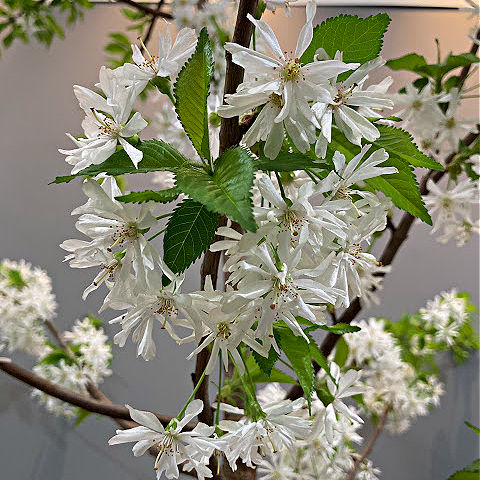
Winner of RHS Plant of the Year 2024, I saw this in full bloom at Chelsea Flower Show and liked it so much that I ordered one for the garden. It is unfussy about soil type as long as it is not in constantly waterlogged soil. Grow in full sun for best flower display and colour in autumn. This deciduous, ornamental cherry tree produces scented flowers in mid or late March to early April. The flowers are unusual in that they look more like those of a Magnolia stellata than the usual cherry flower. Grows to 400cm height and 300cm spread in around 10 years.
Kniphofia ‘Bressingham Comet’
This variety of red hot poker grows to 60cm in height and has red-tipped, apricot yellow flowers from summer to autumn. Grow on loam and sandy soil, in full sun or partial shade. West- and south-facing sites are ideal. They are hardy in most of the UK and Ireland, but may struggle in colder winters. I grew one in a large pot for several years and it thrived.
Astilbe ‘Europa’
Here’s another of the heavenly plants for easy gardening in a damp area of the garden. Astilbe ‘Europa’ is an early flowering, herbaceous perennial. It grows to 50cm height and produces palest pink flowers. Grow in partial shade in sheltered position and avoid growing on a south-facing site. It likes loam and clay soils that retain moisture. This plant is on my wish list and as soon as I have some sheltered areas in the garden, I will be planting Astilbes. And, if you are wondering what the connection is to celestial bodies, Europa is the fourth largest of Jupiter’s moons.
Begonia ‘Stellar Storm’
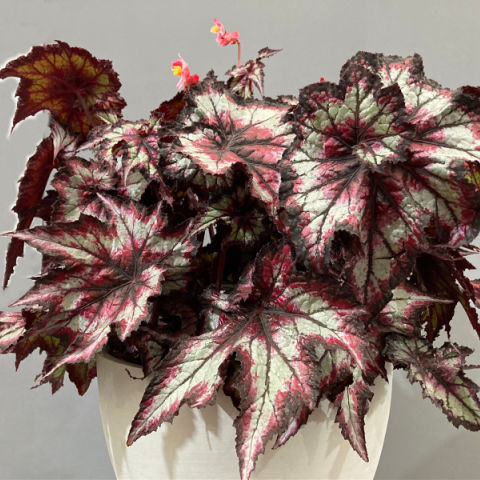
Here’s an interesting plant for a shady spot outside during the summer as a bedding plant, and indoors for the remainder of the year. Begonia ‘Stellar Storm’ has striking spiral-shaped, spiky edged leaves with burgundy-purple, red and silver markings. Indoors, it is not a plant to hog the windowsill space as it prefers a spot that is indirectly lit. Height 30cms, spread 35cms. This tender plant will not survive freezing temperatures, so bring it inside before the first frosts and do not plant out until all risk of frost has passed.
Coreopsis grandiflora ‘Solar Moon’
A compact plant for the front of the border and in containers. Height 50cm and 35cm spread. Grow in any soil, except clay in full sun or partial shade. Avoid growing in a north-facing site because it will fail to thrive. This herbaceous perennial has a dense, bushy habit and produces plenty of yellow flowers with a darker centre. A long-flowering plant that provides colour from spring to autumn.
Knautia macedonica ‘Mars Midget’
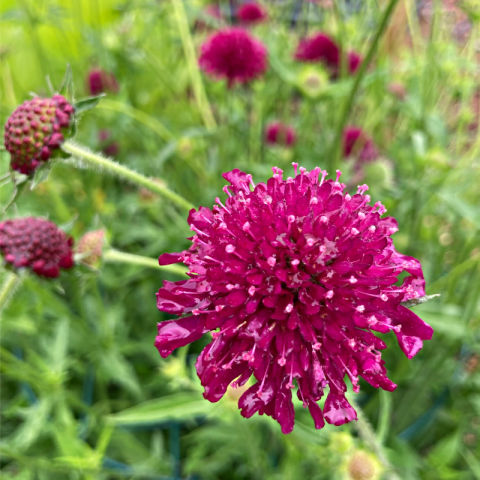
Knautia is one of the plants in my garden that everyone admires and asks what it is. The scruffy mound of foliage is semi-evergreen, so in milder winters, the foliage may remain. The pincushion flowers appear in summer on wiry stems above the foliage. Deadhead very frequently, removing the flower stems, not just the flower heads, for a continued display through to late autumn. ‘Mars Midget’ is a dwarf form of Knautia and reaches around 40cm in height, thus making it ideal for near the front of the border. It deserves to be included in the list of heavenly plants that make easy gardening. Grow in any well-drained soil that is alkaline or neutral. Position in full sun in a west- or south-facing site. It will fail to thrive in acid or clay soils. Hardy across UK, Ireland and the rest of Europe.
Amsonia Tabernaemontana
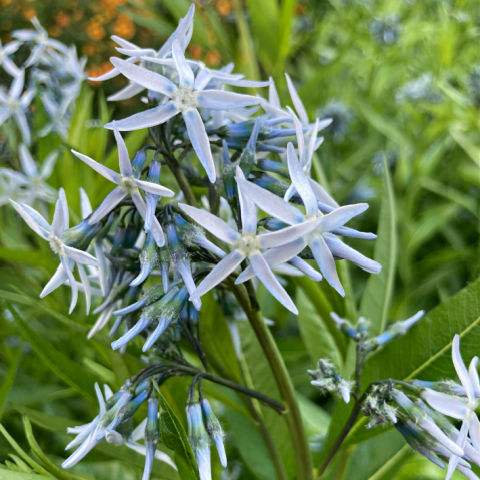
Commonly known as Blue Star, this an interesting plant for all but north-facing gardens. It even has some drought tolerance for drier areas of the country. It’s relatively unfussy about soil type, will tolerate partial shade, but thrives most in full sun. The clusters of small grey-blue flowers appear from May to July. Height 60cm and 40cm spread. Hardy throughout UK and Ireland. I saw them at Kew Gardens and was instantly attracted to their unusual colour. Additionally, check out this article about other plants with true blue flowers.
Cornus kousa ‘Milky Way’
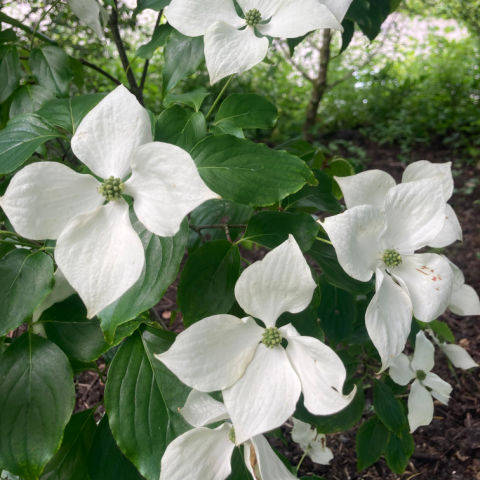
Pale cream bracts smother the branches of this small tree in late spring or early summer. Growing to 600cm in height and with spreading habit, it may not be ideal for a small garden. But it you have the space, or are prepared to do some judicious pruning on a regular basis, Cornus kousa ‘Milky Way’ will provide drama and interest for much of the year. In autumn, there are fruits and the leaves turn orange and red. And in winter, the bark provides interest too. Grow in acid or neutral soil, avoiding peaty soils and north-facing sites. Hardy across UK, Ireland and the rest of northern Europe.
I was given quite a large plant that was transplanted into my garden almost three years ago. Although it hasn’t died, it also hasn’t thrived, so I am hoping next year will be better for it.
Clematis ‘Helios’ (Ta)
Helios is the name of the Greek god of the sun. This deciduous climber is aptly named, because it has dangling, bright yellow flowers that have a coconut fragrance. It can reach 220cm height. Plant with the crown 6-8cm below soil level as this will encourage plenty of new growth. ‘Helios’ is unfussy about soil type as long it is neutral or alkaline. Grow in full sun or partial shade. Hardy throughout UK, Ireland and northern Europe. Additional interested is provided by fluffy seed heads in autumn.
Rosa ‘Blue Moon’
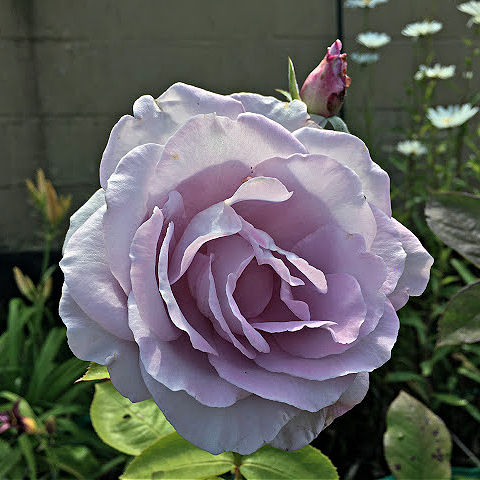
When I first saw photos of a ‘Blue Moon’ rose, I was intrigued by the pale mauve colour and didn’t quite believe it. I decided to buy one to see whether the colour in the photos was correct and to my delight, the petals were indeed a pale lilac-mauve and the flowers are sweetly scented. It has an upright growth habit to 90cm height and is repeat flowering from summer into autumn. It is unfussy about soil and situation, but will need full sun, in a sheltered position, to grow at its best. Hardy across UK, Ireland and the rest of northern Europe. Sadly, my plant didn’t survive a visit from the neighbour’s sheep and the local rabbit population!
Peach ‘Saturne’
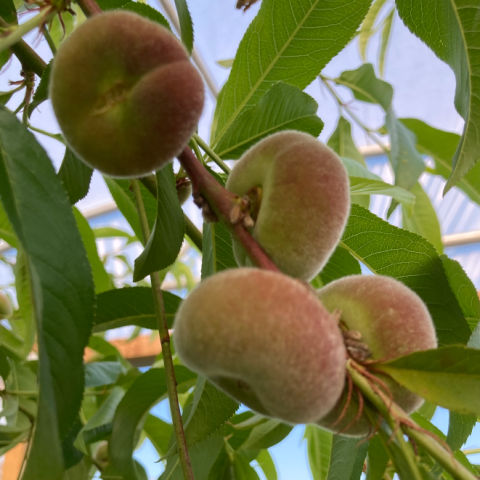
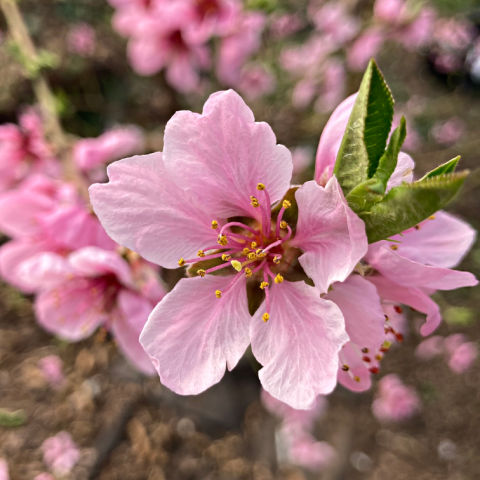
The fruits of ‘Saturne’ are often described as flat or doughnut peaches. The vigour of the tree is determined by the rootstock onto which it is grafted, therefore there will be a peach tree for every size of garden. In early spring, it produces pretty pink flowers with pink pistil and stamen.
Peach leaf curl can be a real nuisance, and potentially weaken and kill a tree over the course of a few years. This fungal disease comes in the rain between January and the end of May. To help avoid peach leaf curl, grow the tree under cover, or against a wall of the house, because it will be sheltered from much of the rain.
For trees grown under cover, it may be worth pollinating the flowers by hand. I use a small children’s paint brush to gently gather some pollen from the centre of one flower and move to a different flower and stroke it against the centre. The fruits mature in early to mid-summer.
Further information
The article, Heavenly plants, easy gardening, was written for Amateur Gardening magazine in late 2025. I may have updated some of the specific varieties and images and included more suggestions and varieties. Additionally, links are included to help you find the suggested plants.

- Heavenly plants easy gardening - February 27, 2026
- Plants to divide in autumn - January 31, 2026
- 11 Bulbs to plant in autumn - January 16, 2026